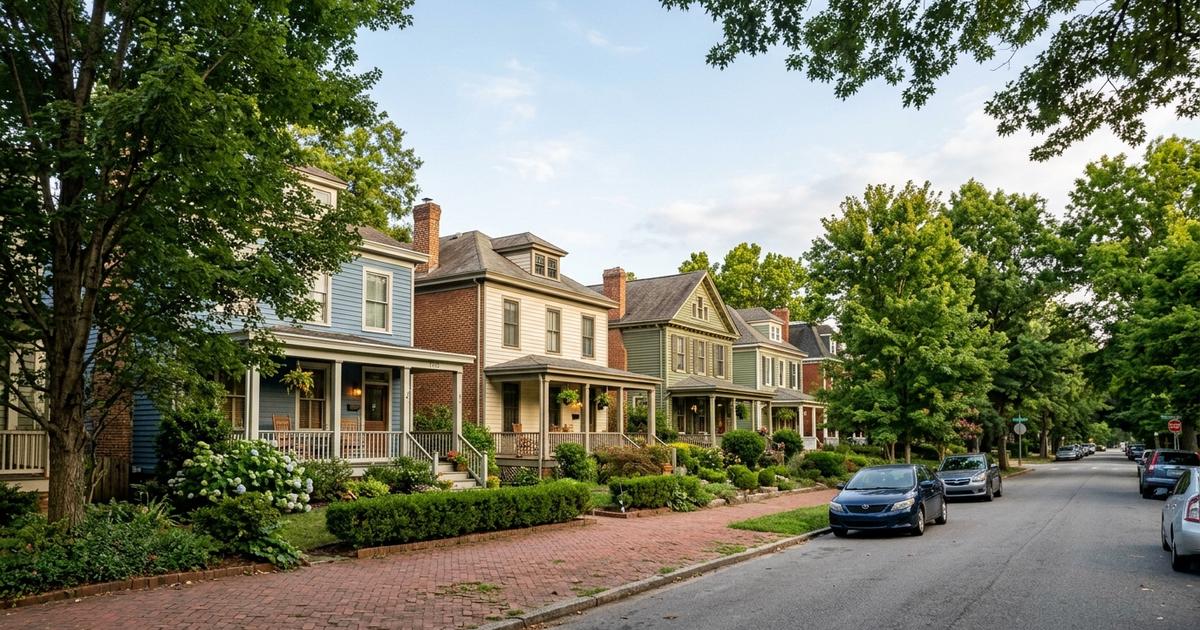

I'm Elizabeth Lucchesi, REALTOR®, founder of The LizLuke Team at Long & Foster Real Estate in Old Town Alexandria, Virginia. If you've set your heart on a brick rowhouse here, you're in good company. The gas lamps, the two-hundred-year-old facades, that's why people fall for Old Town and never leave.
But a historic home carries a layer of rules a newer house never will. The buyers who get surprised are almost always the ones who found out after closing instead of before. None of it is complicated once you know what to look for.
What does the Board of Architectural Review actually control?
In Old Town Alexandria, Virginia, the Board of Architectural Review must approve a Certificate of Appropriateness for new construction and exterior alterations on any structure visible from a public way, and a Permit to Demolish for removing more than 25 square feet of material on a structure, whether or not it faces the street. Interior work that doesn't remove protected historic material is generally not reviewed. Those rules come from the City of Alexandria and were current as of August 2026.
Most of Old Town sits inside the Old and Historic Alexandria District, which the city describes as the third oldest historic district in the nation. The board, usually called the BAR, also oversees the neighboring Parker-Gray District and individual buildings the City Council has designated by ordinance as One Hundred-Year-Old Buildings.
Here's how the city's own summary of the requirements sorts it out:
What you're planning | What the city requires | Does street visibility matter? |
|---|---|---|
Exterior alteration or new construction | Certificate of Appropriateness | Yes. Required only if visible from a public way. |
Removing more than 25 square feet of material | Permit to Demolish | No. Required regardless of visibility. |
Interior updates, no protected material removed | Generally no BAR review | Not applicable |
Source: City of Alexandria historic preservation requirements, retrieved August 2026.
Note the difference in that middle row, because it's the one that catches people. Visibility from the street decides whether an alteration needs review. It does not decide whether a demolition does. Plenty of buyers plan an interior gut renovation assuming nobody can see it, which is true and also beside the point.
In Old Town, the question is never just "can I afford this house." It's "what will the district let me do with it." Answer that before you write the offer, not after.
How a project gets judged is a separate question. The city publishes a Guide to the Board of Architectural Review Process covering both districts. Read the sections that apply to your plans before you spend money on drawings.
Does the 100-year rule apply to a house outside the historic district?
It can. Beyond the Old and Historic Alexandria and Parker-Gray districts, the City of Alexandria also regulates individual buildings that City Council has designated by ordinance as One Hundred-Year-Old Buildings, and those sit outside the district lines. Designation is by ordinance, not automatic by age, so the answer depends on the specific address rather than the year the house was built.
This is the one that surprises even seasoned buyers. A home in a neighborhood you'd never think of as historic can still fall under review. If you're buying with a major renovation or a tear-down in mind, check the address, not the map.
How long does BAR approval take in Old Town Alexandria?
The Board of Architectural Review holds public hearings at 7:00 p.m. on the first and third Wednesday of every month except August, so a project that needs a full hearing waits for the next available date and loses the entire month of August. Smaller projects that clearly fit the guidelines can often be handled by preservation staff without a hearing. Build review time into any renovation timeline, because it can add weeks.
The city confirms the first and third Wednesday schedule, with August off. That August gap is worth planning around if you're closing in summer.
If a decision doesn't go your way, appeals from a Board decision are heard by City Council, and the city's Record of Appeal form gives you fourteen days from the decision to file. Fourteen days is not long. Know the deadline before the hearing, not after.
Alexandria's preservation staff are genuinely helpful early in a project, and calling them costs nothing. They're at [email protected] or 703.746.3833.
One more thing on process. Never assume a previous owner's unpermitted work is something you can simply keep. If a change was made without the right approval, it becomes your problem after closing.
Does Old Town Alexandria flood?
About 20% of Alexandria, Virginia is mapped as a floodplain, susceptible to flooding from low-lying streams and from proximity to the Potomac River, according to the City of Alexandria as of August 2026. The lower riverside blocks of Old Town are where that shows up most. Flood risk can change street to street, so the designation that matters is the one attached to a specific address, not to the block or the neighborhood.
The city has been investing in waterfront flood mitigation for years precisely because the risk is real, and it's worth understanding before you fall for a block. If you're still getting to know the geography, my walk-through of what's changed along King Street covers how the neighborhood sits between the waterfront and the ridge. Two numbers every Old Town buyer should sit with:
- Your homeowners policy covers none of it. The city states plainly that "your homeowner's insurance policy will not cover losses due to flooding." Flood coverage is a separate policy.
- Thirty days. There's a 30-day waiting period before National Flood Insurance Program coverage takes effect. That's a timeline problem if you learn about it at the closing table.
So do two things. Check the address against the City of Alexandria Flood Map. Then price flood insurance early, while you still have room to negotiate. Neither is a reason to walk away from a home you love. They're reasons to go in with your eyes open and your budget honest.
Your pre-offer checklist
Before you write an offer on a historic Old Town home, confirm these six:
- Whether the property sits inside the Old and Historic Alexandria or Parker-Gray district.
- Whether the building carries a One Hundred-Year-Old Building designation, which applies outside the districts.
- Any exterior changes you're counting on, and how they read against the city's published design guidance.
- Whether past work on the home was properly permitted and approved.
- The address-level flood map designation, and a real flood insurance quote.
- Enough time in your renovation plan for review, including the August gap.
Run those six before you're under contract and you remove almost every unpleasant surprise a historic home can hand you.
Questions buyers ask me most
Do I need approval to renovate a historic home in Old Town Alexandria?
For exterior work visible from a public street or alley, usually yes. The Board of Architectural Review approves a Certificate of Appropriateness for new construction and visible exterior alterations in Alexandria, Virginia's historic districts. Interior updates that don't remove protected historic material are generally not reviewed.
Do I need BAR approval to demolish part of my house if nobody can see it?
Yes, if it's more than 25 square feet of material. The City of Alexandria requires a Permit to Demolish for any proposed demolition of more than 25 square feet on a structure, regardless of visibility from a public way. This is the rule that most often catches buyers planning an interior gut renovation.
What is a Certificate of Appropriateness?
It's the City of Alexandria's approval for exterior changes and new construction in the Old and Historic Alexandria and Parker-Gray districts. The Board of Architectural Review reviews your plans against the design guidance the city publishes for both districts, and the approval is required before the work begins.
Should the historic rules stop me from buying in Old Town?
Rarely. The same rules that add a step to a renovation are the reason the district still looks the way it does. The point is to understand them before you buy so your plans and your budget are realistic.
I've spent more than twenty years helping people buy in this neighborhood and, later, helping them let it go gracefully for the next chapter. If you're weighing a specific home and want help reading the district lines, the renovation potential, and the flood picture before you write an offer, reach out. If you're earlier than that and just want to know what your current place is worth, start with what your number actually is. Elizabeth Lucchesi, Realtor®, The LizLuke Team at Long & Foster Real Estate, Old Town Alexandria, Virginia.
This guide is general information about buying in Old Town Alexandria, Virginia and is not legal, insurance, or tax advice. Regulatory details reflect City of Alexandria requirements as published and retrieved in August 2026. Historic district boundaries, review requirements, One Hundred-Year-Old Building designations, and flood designations are set by the City of Alexandria and can change. Confirm all details for a specific property with the City of Alexandria and qualified professionals. All information is deemed reliable but not guaranteed and should be independently verified. Equal Housing Opportunity.