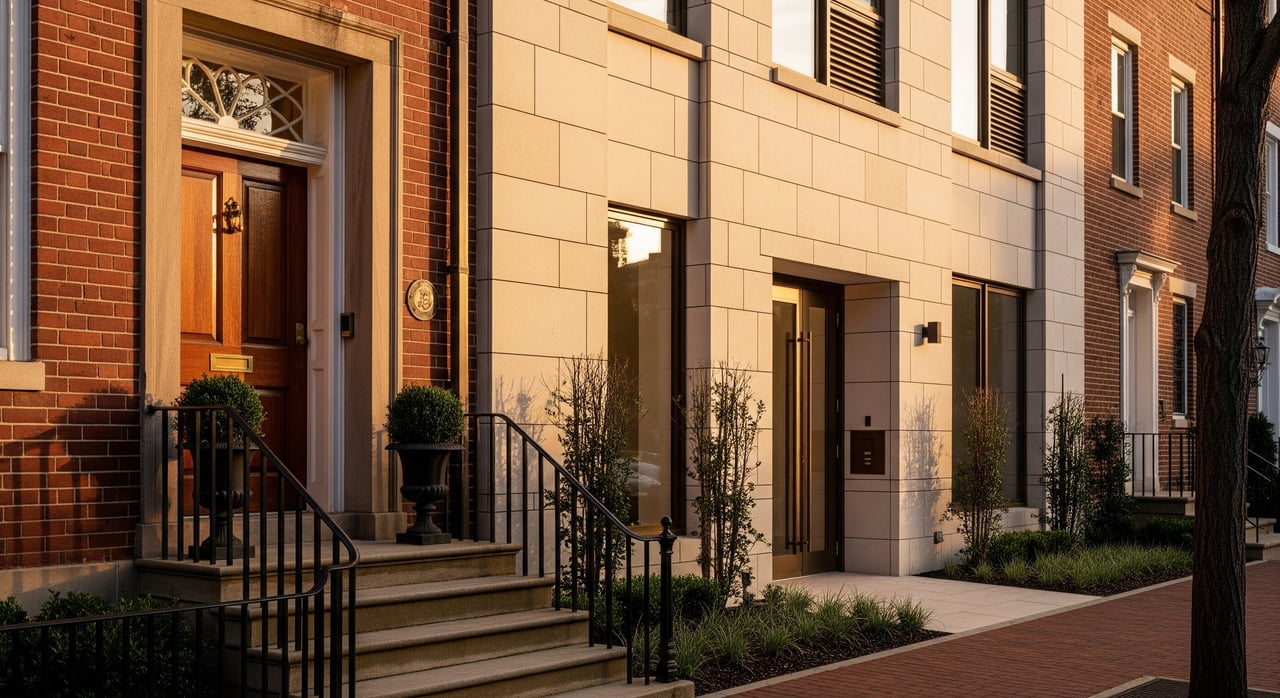
Torn between a classic Old Town rowhouse and a low‑maintenance condo? You’re not alone. With historic charm, walkable streets, and easy access to Metro and the airport, Old Town gives you great options on both sides. In this guide, you’ll learn how ownership works, what monthly costs really look like, and which lifestyle and resale factors matter most in Old Town. Let’s dive in.
Old Town at a glance
Old Town is a dense, walkable historic district along the Potomac with shops, dining, and waterfront parks centered on King Street. Proximity to the King Street Metro and Reagan National Airport makes commuting simple. You’ll find low‑rise condos, converted historic buildings, and rows of classic townhomes.
Historic preservation is part of daily life here. Many properties sit within municipal or national historic districts, which means the City’s Board of Architectural Review may regulate exterior changes like windows, roofs, and porches. Narrow streets and limited on‑street parking make assigned spaces or garages valuable. Properties closer to the waterfront may be in FEMA flood zones, so flood insurance and elevation details can affect your budget and renovation plans. If you intend to rent, review Alexandria’s rules for short‑term rentals and any HOA restrictions before you buy.
Condo vs townhome basics
How condo ownership works
When you buy a condo, you own the interior of your unit plus a shared interest in common elements like the roof, hallways, grounds, and building systems. A condo association manages the property, enforces rules, and collects monthly assessments to maintain common areas. Lenders also evaluate a building’s financial health and status, which can affect your loan options.
Key documents to review at resale include the declaration, bylaws, rules, budget, reserve study, meeting minutes, insurance, litigation disclosures, and the condo resale certificate required by Virginia law.
How townhome ownership works
Most Old Town townhomes are fee‑simple. You own the land and the structure, including front and back yards as noted on the plat. Some townhome communities have an HOA for shared elements or alleyways. If there’s no HOA, you have more autonomy and more responsibility for exterior maintenance.
At resale, review the deed, plat, any HOA covenants and bylaws, surveys, and any easements or party‑wall agreements.
What this means day to day
- Condos concentrate exterior responsibilities with the association. You pay a monthly fee and follow building rules.
- Townhomes give you more control over your property and typically more space, but you handle your own exterior upkeep unless an HOA covers certain items.
Monthly costs and fees
Price and fees in Old Town
Condos often provide a lower entry price than townhomes, though the range varies by location, size, and amenities. Townhomes tend to command a premium for space, private entrances, and outdoor areas. Condo fees are common and can be higher because the association maintains the roof, exterior, security, elevators, and landscaping. Townhomes may have lower or no HOA fees if fee‑simple without shared amenities.
Property taxes follow assessed value. Because townhomes often sell for more, they typically carry higher tax bills. Condos sometimes include utilities like water or trash in fees, and some buildings include heat. Always confirm what your fee covers.
Your true monthly cost
Focus on the full picture. Your budget should account for more than principal and interest.
- Mortgage (principal and interest)
- Property tax
- HOA or condo fee
- Homeowner’s insurance (HO‑6 for condos, HO‑3/HO‑5 for townhomes)
- Utilities not covered by fees
- Maintenance and repair fund
Tip: Treat the condo fee as part of your housing payment. A lower purchase price with a high monthly fee can equal a similar or higher total cost than a townhome.
Reserves and special assessments
A strong reserve study and healthy reserves help associations handle big projects without special assessments. Older buildings and historic conversions can face capital needs like roofs, masonry, or systems updates. Review the association’s budget, reserve study, recent or pending assessments, insurance, owner‑occupancy ratio, and any litigation. These factors affect both your monthly carrying cost and your financing options.
Financing and insurance
Condo financing and warrantability
Many lenders, including Fannie Mae, Freddie Mac, and FHA, have standards for condo projects. Buildings with pending litigation, high investor concentration, or weak reserves may be non‑warrantable, which can limit loan options. If you plan to use an FHA loan, confirm the project’s approval early.
Townhome financing
Fee‑simple townhomes are typically underwritten like single‑family homes. Conventional financing is usually straightforward compared with condo project reviews.
Insurance basics
- Condos: You typically carry an HO‑6 policy for your interior finishes and personal property. The association holds a master policy for common elements. Check whether the master policy is full replacement or bare walls and note the deductible.
- Townhomes: You usually carry full homeowner’s insurance that covers the structure and contents. If an HOA exists, confirm what, if anything, the association insures.
Flood insurance
If a property sits in a mapped FEMA flood zone and you use a federally backed mortgage, flood insurance is usually required. Premiums can be higher near the waterfront or at lower elevations. Even outside regulated zones, some buyers choose coverage for additional protection.
Space, lifestyle, and renovation
Space and layout
Condos often have a smaller footprint, a balcony instead of a yard, and shared corridors, but many offer central locations and amenities. Townhomes provide vertical living with multiple levels, private entrances, and potential for small yards or roof decks. If you need multiple bedrooms or a home office, a townhome or larger condo may fit better.
Noise and privacy
Condos have shared walls, floors, and hallways that can transmit sound. Townhomes share party walls but often feel more private thanks to separate entries and outdoor space. Ask about building construction, sound attenuation, and how noise complaints are handled.
Renovations and historic rules
Exterior changes in Old Town’s historic district typically require approval. Even items like HVAC placement or satellite dishes can be regulated. Condos limit structural changes that affect common elements. Townhomes give you more control inside, but historic review can still affect windows, doors, roofs, and exterior materials. Expect longer timelines and higher costs for historically compliant work.
Parking, storage, and access
Parking is a premium in Old Town. Assigned spaces or garages add value and convenience.
- Confirm whether the unit includes a deeded or assigned space and how guest parking works.
- Understand residential permit rules for street parking.
- For townhomes, check alley access, garage size, and driveway clearance.
- Evaluate storage options: basements, attics, closets, or building storage lockers.
Resale and long‑term outlook
Demand and buyer pools
Condos often attract first‑time buyers and relocating professionals who want low‑maintenance living close to amenities. Townhomes draw move‑up buyers and those who want outdoor space. Owner‑occupancy can stabilize values, while high investor presence can affect financing and demand.
Appreciation and risk
In Old Town, fee‑simple townhomes often show stronger appreciation because historic rowhouses are scarce and in demand. Condos can be more sensitive to building‑level issues like litigation or poor reserves and to interest‑rate shifts. Limited overall inventory across Old Town supports price resilience, but individual conditions matter.
What helps resale in Old Town
- Healthy association reserves and transparent governance
- Higher owner‑occupancy ratios
- Parking and private outdoor space
- Well‑preserved historic character and good property condition
- Clear rental policies that match buyer demand
A simple decision framework
Use this quick framework to decide which path fits you best.
- Define priorities
- Commute and walkability goals
- Space needs now and later (bedrooms, office, storage)
- Maintenance tolerance: low‑maintenance condo living or hands‑on townhome ownership
- Set a true budget
- Add mortgage, taxes, insurance, HOA/condo fee, utilities, and a maintenance escrow
- Compare realistic condo and townhome scenarios in the same micro‑location
- Do association due diligence
- Request budget, reserve study, minutes for 12–24 months, insurance, litigation disclosures, assessment history, delinquency rate, and rental policy
- Pre‑check financing and insurance
- Confirm condo project warrantability and FHA status if applicable
- Check FEMA flood maps and get a preliminary flood quote if needed
- For condos, understand the master policy and what your HO‑6 must cover
- Lifestyle checks
- Parking assignment, guest rules, and storage options
- Pet policies, noise rules, and guest policies
- Renovation constraints in the historic district
- Resale lens
- Review nearby comparables for similar age, size, and location
- Evaluate owner‑occupancy and rental restrictions that shape your future buyer pool
- Walk the property like an inspector
- Condos: common areas, elevator condition, security, trash and recycling, parking access, odors or water intrusion
- Townhomes: masonry or siding condition, roof age, gutters and drainage, foundation, alley and garage access
What to check before you write an offer
- Condo or HOA financials and the reserve study
- Minutes from recent board meetings and any litigation disclosures
- Any engineer’s report for older conversions
- Proof of parking assignment and guest parking rules
- Evidence that prior exterior work was approved under historic guidelines
- Flood zone determination and a sample flood‑insurance quote
- Lender confirmation of condo warrantability if you’re buying a condo
The bottom line
If you want the least maintenance and a central address, a condo can be a great fit. If you want more space, private outdoor areas, and control over your property, a fee‑simple townhome may be worth the premium. The best choice balances your lifestyle, true monthly cost, renovation plans, and long‑term resale goals in Old Town’s historic context.
If you’d like a tailored side‑by‑side comparison of specific buildings and streets, or help reviewing an association’s financials, reach out to The LizLuke Team. Our Old Town specialists can help you compare real options, avoid pitfalls, and move forward with confidence.
FAQs
Are condos cheaper than townhomes in Old Town?
- Generally yes on an entry‑price basis, while townhomes usually command higher prices due to space, private entrances, and scarcity.
Do condo fees in Old Town include utilities?
- Sometimes. Water, trash, and common‑area electric are often included. Heating and cooling coverage varies by building, so verify the fee breakdown.
Can I get any condo financed with a conventional or FHA loan?
- Not always. Some projects are non‑warrantable or lack FHA approval due to litigation, investor ratios, or reserves. Confirm project status with your lender early.
Will historic district rules limit my renovations?
- Exterior changes visible from public areas usually require review and approval. Interior work is typically allowed unless it affects historic fabric or shared systems.
Is flood insurance required for Old Town properties?
- If the home is in a regulated FEMA flood zone and you use a federally backed mortgage, lenders usually require it. Many waterfront buyers choose coverage even outside mapped zones.