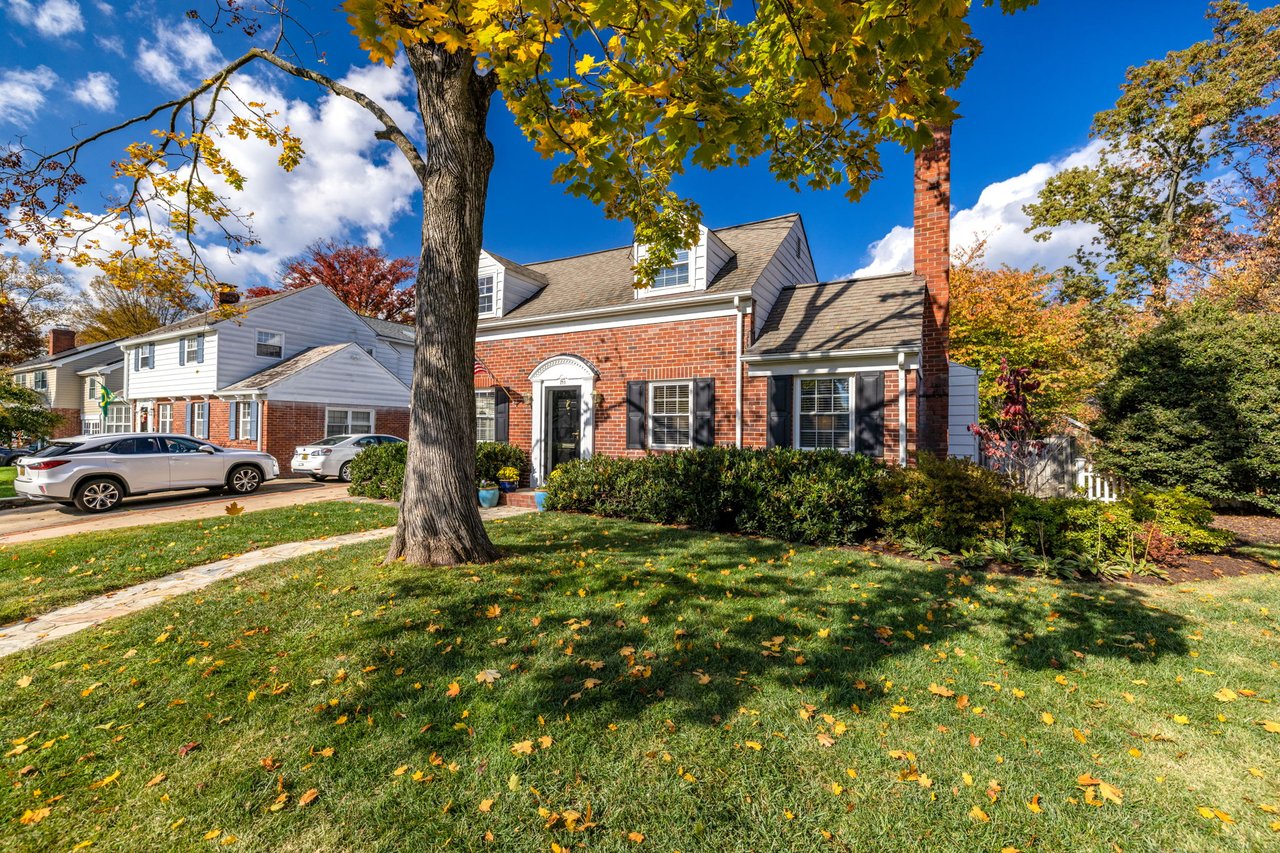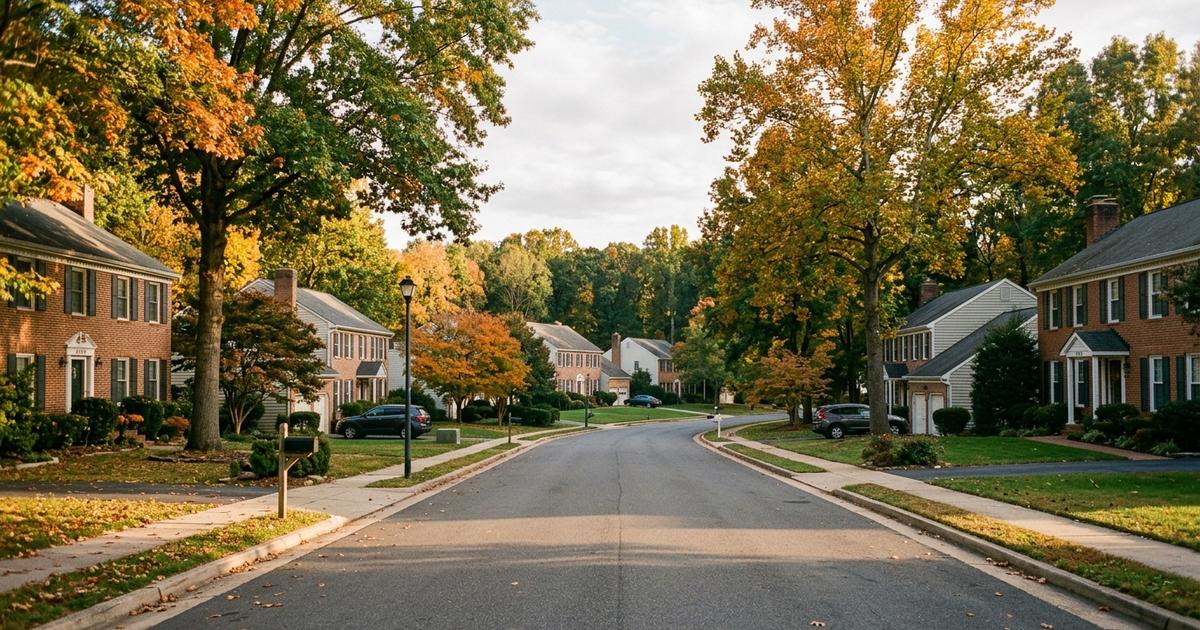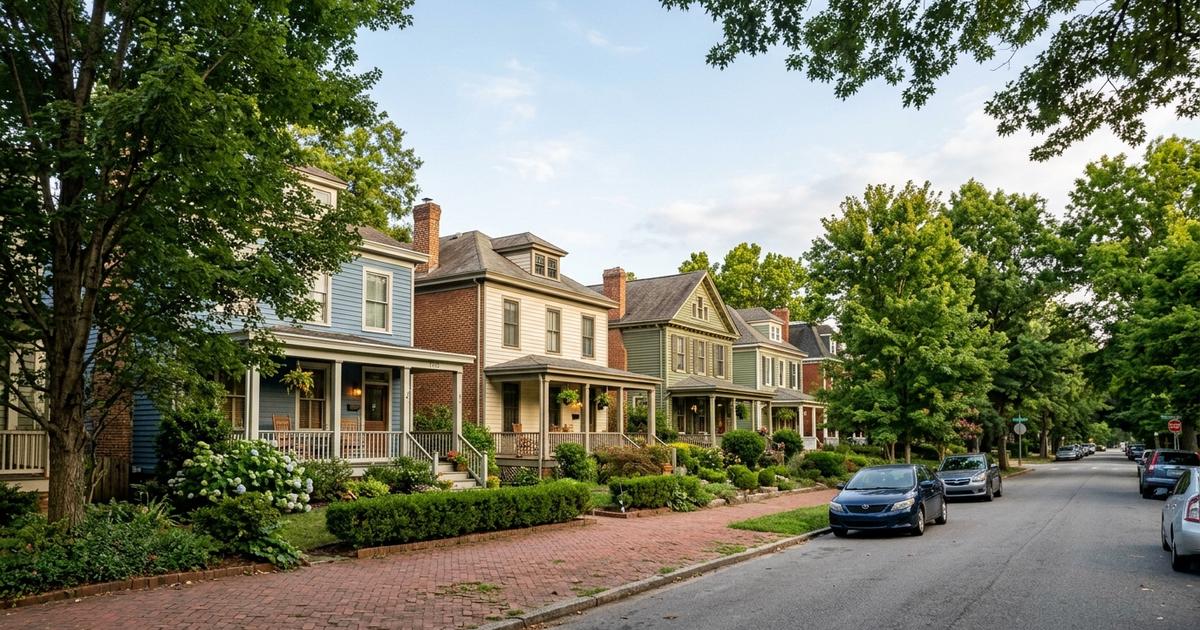
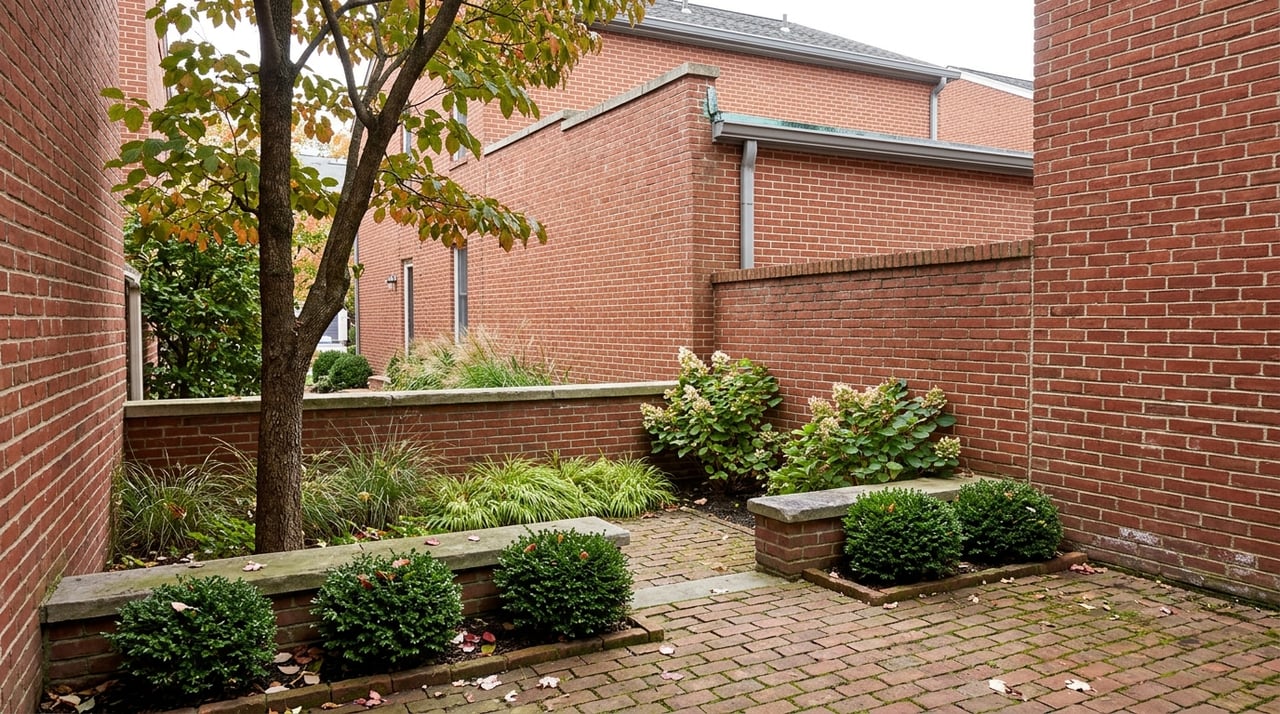
Walk the interior streets of Warwick Village and you will not pass a single shop. No coffee counter, no corner store, no restaurant with a chalkboard sign. The neighborhood is bounded by Mount Vernon Avenue, Mosby Avenue, Sanborn Place, and Mt. Ida Avenue, and inside that rectangle sit roughly 600 nearly identical brick townhomes built in the mid-1950s, two small parks, and one public pool. That's it. Everything else people associate with living here, the restaurants on Mount Vernon Avenue, the farmers market, the yoga studio, technically belongs to Del Ray, the neighborhood next door.
So how does a purely residential pocket of Alexandria end up with a full civic calendar, a functioning pool, and a name people recognize across the city? The answer is that Warwick Village outsourced its commercial identity to its neighbor decades ago and built its actual social infrastructure out of volunteers instead. The Warwick Village Citizens Association has been organizing this place since 1953, which means it predates the very conversion that made these homes individually ownable. The pool that anchors the neighborhood's summer runs in part on a volunteer group called Friends of Warwick Pool. There is no chamber of commerce here, no business improvement district. There's a Zoom link and a mailing list.
A Citizens Association Older Than Individual Home Ownership Here
Most of the standard neighborhood history gets repeated the same way: Warwick Village takes its name from the Warwick Estate, once the country home of 19th-century DC businessman Frank Hume, demolished when the townhomes went up in the 1950s. What gets skipped is the sequencing. The Warwick Village Citizens Association formed in 1953, while the townhomes were still built as rental units. The homes weren't converted to individual ownership until 1970. That means the association organizing this neighborhood's civic life has been around longer than the concept of a Warwick Village homeowner has existed.
That association still runs on the same basic model. Membership dues are $15 per adult per year, $5 for seniors 65 and older. The group holds monthly meetings, mostly over Zoom, and it isn't a rubber-stamp operation. One recent meeting drew Alexandria Mayor Alyia Gaskins as a guest, which tells you the association carries enough weight in the neighborhood to get a sitting mayor on a call.
The Pool Nobody Pays a Developer to Maintain
Warwick Pool sits at 3301 Landover Street, and it's a city-owned facility, but the group most invested in keeping it running is Friends of Warwick Pool, a volunteer organization built specifically around this one amenity. The pool runs a real weekly schedule that splits most days between lap swim and open swim blocks, with open swim getting the larger share of the hours on weekdays. It is the kind of granular, unglamorous detail that only matters if you actually live close enough to walk there, which is exactly the point. This isn't a resort amenity built to sell homes. It's infrastructure a group of neighbors decided was worth keeping alive.
Four Fixed Points on the Calendar
Strip away the day-to-day and Warwick Village's year comes down to a small number of dates the citizens association owns outright:
- The Mega Yard Sale, held every spring, where residents across Warwick Village and neighboring streets sell together rather than compete for foot traffic on the same Saturday.
- Adopt-A-Park, a standing volunteer program for the neighborhood's own green space rather than a citywide initiative residents opt into.
- National Night Out, held this year on Tuesday, August 4, when Warwick Village Citizens Association hosted its site at 3301 Landover Street, the same address as the pool. Alexandria logged a record 54 neighborhood events citywide for the 2026 event, and Warwick Village has hosted a site at that address for years running.
- Luminaria, the neighborhood's December tradition, scheduled this year for Saturday, December 13, when residents line the streets with candlelit bags.
None of these require a business to sponsor them. None of them exist because a developer built an amenity center. They exist because a volunteer board keeps scheduling them, year after year, since 1953.
The Two Parks Inside the Boundary
If you want green space without leaving Warwick Village's four streets, there are exactly two options, and they serve different purposes. Goat Hill Park sits inside the residential grid and its playground is built for a specific age band, kids five to ten, rather than trying to be everything to everyone. Landover Park, a few blocks over, is smaller in ambition: a play area, a shelter, a sitting area, the kind of spot you use for twenty minutes on the way somewhere else rather than an afternoon destination.
Neither park tries to compete with the larger recreational draws elsewhere in the city. That's consistent with everything else about how this neighborhood is built. Warwick Village doesn't seem interested in being a destination. It's built for people who are already there.
The One Business Address That Feels Like It Belongs Here Anyway
There is exactly one recurring local business event that has the same neighbor-run texture as the citizens association's calendar, and it happens just outside Warwick Village's technical boundary. Vélocity Bicycle Cooperative runs a warehouse sale on the third Saturday of every month, tucked behind 1502 Mount Vernon Avenue, behind Al's Steakhouse, with a Capital Bikeshare dock sitting out front. It isn't a retail storefront with regular hours. It's a cooperative, run on a schedule, selling parts and frames that haven't been fully tuned up, the kind of operation that survives because a specific group of people show up for it every month rather than because it advertises widely.
That's the same pattern as the pool and the citizens association: small, specific, sustained by repeat participation rather than foot traffic. Warwick Village's actual character isn't found in a business district. It's found in the handful of recurring things that keep happening because enough neighbors keep showing up to make them happen.
What This Actually Means If You Live Here
None of this is secret information, exactly. It's scattered across a Facebook page, a city parks listing, and a pool schedule that most people only check the week they want to swim. But taken together, it says something specific about Warwick Village: this is a neighborhood that built its own civic infrastructure instead of importing it, and that infrastructure has outlasted the original rental arrangement, several decades of Alexandria's growth, and the arrival of Amazon's second headquarters a few miles away that reshaped home prices across this corner of the city.
If you're new to the neighborhood, the fastest way into its actual rhythm isn't a restaurant reservation on Mount Vernon Avenue. It's paying the $15 in citizens association dues, catching the last stretch of open swim before the pool closes out its season, and putting December 13 on the calendar for Luminaria. The neighborhood runs on people who do exactly that.
The LizLuke Team lives and works in this part of Alexandria, and we hear about Warwick Village's calendar the same way residents do, through neighbors, meetings, and the pool schedule taped up by the gate. If you're curious what a Warwick Village home is actually worth in today's market, or you just want to talk through what owning here looks like day to day, reach out anytime. And if you're already thinking about your next move, Get Your Free Home Valuation and let's talk specifics.