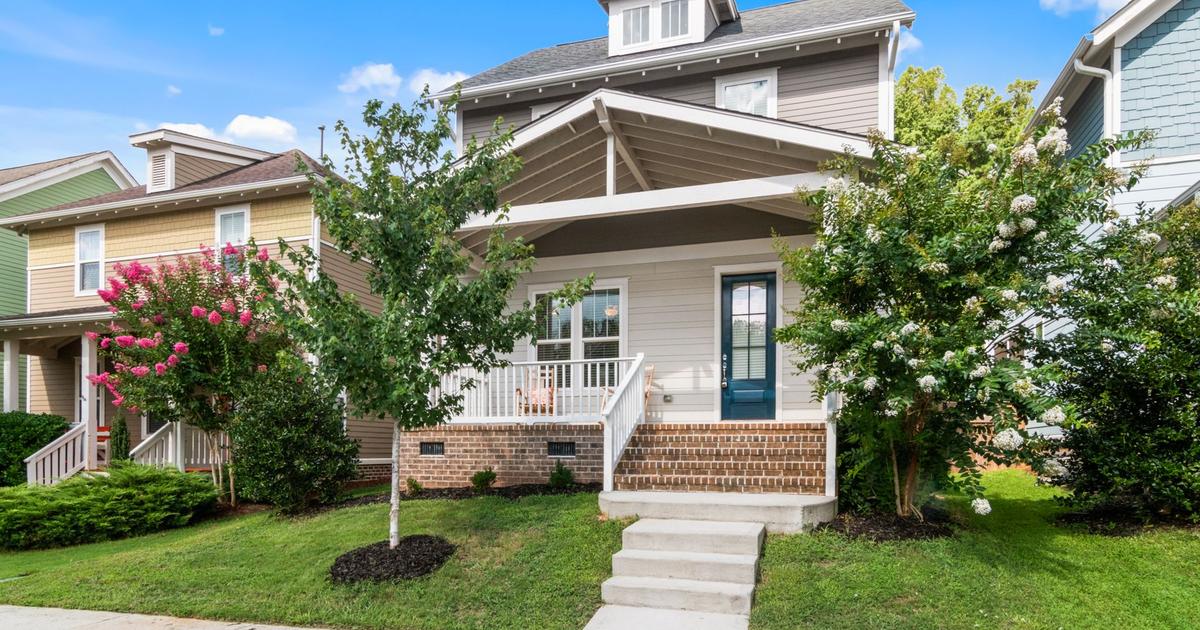
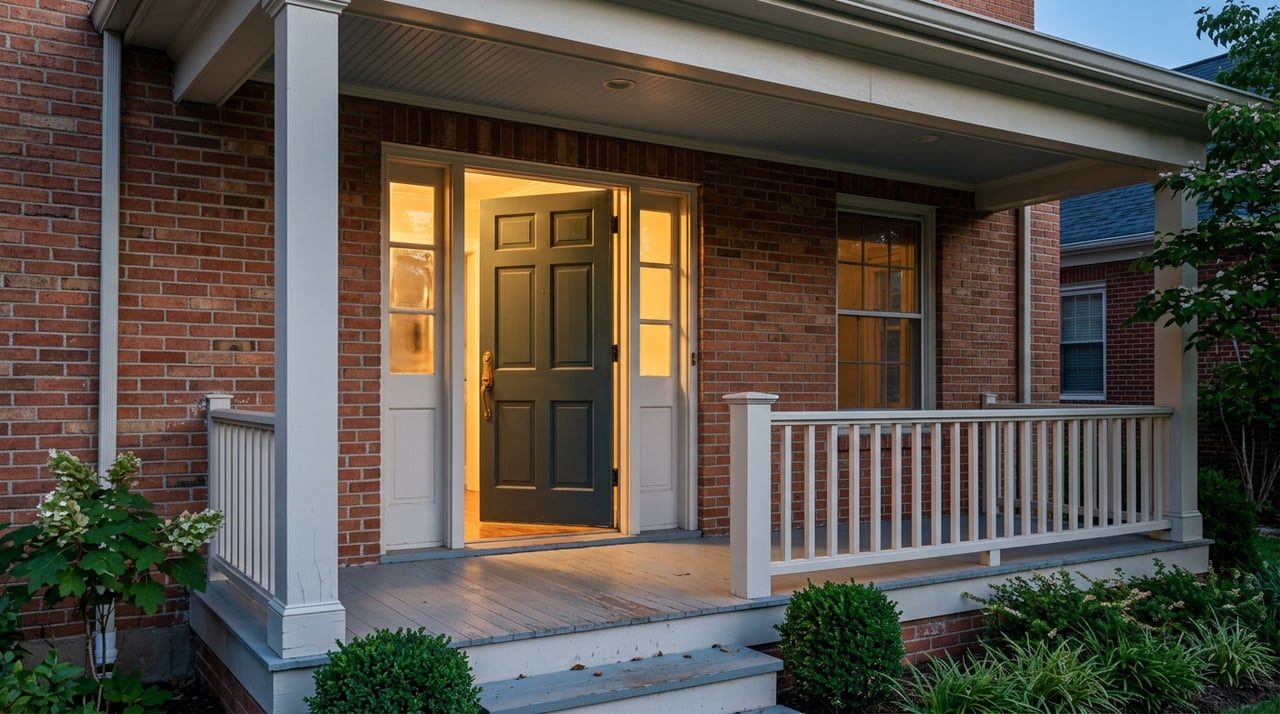
Buyers touring Rosemont often ask the same question at the same point in the walk-through: can I actually change anything on this house, or am I about to inherit a design review board? It's a fair worry. Rosemont sits on the National Register of Historic Places, and everyone who's shopped in Old Town knows what that can mean. Certificates of appropriateness. Public hearings. A seven-member board deciding whether your new shutters read as period-correct.
None of that applies here. Rosemont's real friction shows up somewhere the buyer never thought to ask, and it doesn't come from a neighbor sitting on a review board. It comes from an underwriter who has never seen the house and never will.
The Board That Never Shows Up
Alexandria has seven National Register historic districts, and Rosemont is one of them, added in 1992. But according to the city's own preservation office, only two of those seven districts are actually regulated locally through the Board of Architectural Review: Old and Historic Alexandria and Parker-Gray. Rosemont isn't one of them. There's no certificate of appropriateness to file before you swap a window, repaint a door, or pull a permit for a rear addition, and interior work never requires BAR approval anywhere in the city regardless of district.
That distinction matters because it changes where your actual risk sits. In Old Town, the friction is procedural. You wait for a hearing date. In Rosemont, the friction is financial, and it's already inside the walls of a home built sometime between 1908 and 1930, when the neighborhood went up as a streetcar suburb of Craftsman bungalows, American Foursquares, and Colonial Revivals near the electric rail line into Washington.
Where the Real Friction Hides
A house built in that window was very likely wired with knob-and-tube: hot and neutral conductors run on ceramic knobs and through ceramic tubes, with no ground wire at all. It was standard practice from the 1880s through the 1940s. It also happens to be the single detail most likely to blow up a Rosemont closing, because it isn't a cosmetic flaw an inspector notes and a buyer shrugs off. It's a line item that can get an insurance application denied outright, months after everyone thought the deal was done.
Here's how that actually plays out once an insurer sees knob-and-tube on file.
| What the carrier does | What it means for you |
|---|---|
| Flat denial | Many standard homeowners insurers won't write a policy at all if the wiring runs through the home |
| Higher premium | Carriers willing to insure it often charge well above a comparable home with modern wiring |
| Conditional coverage | A policy gets issued with a requirement to rewire within 30, 60, or 90 days or face cancellation |
| Last resort only | If every private carrier says no, a state FAIR plan can offer bare-minimum coverage, and it usually costs more for less |
That timing is the part buyers underestimate. You can close on a Rosemont house, get a policy in place, and still receive a cancellation notice half a year later once an underwriting review catches up with the file.
What to Look For Before You're Under Contract
You don't need to open a wall to get a sense of what you're dealing with. During a walk-through, look for:
- White ceramic knobs, roughly one to two inches across, mounted to joists or studs in an unfinished basement or attic
- Cloth-covered wiring strung between those knobs, often black rubber or fabric insulation over copper
- Short ceramic tube sleeves where wiring passes through framing
- An old fuse box, especially one with round screw-in glass fuses, rather than a modern breaker panel
- Any sign the system has been added onto over the decades, since layered modifications tend to be where the real hazard lives
None of that tells you the full scope. Only a licensed electrician can, and that report is exactly what your insurer and your lender will eventually ask for anyway.
"The lack of a ground wire is a significant fire hazard," says Kenneth Gregg, CEO of Orion180 Insurance Services, of knob-and-tube systems.
What It Actually Costs to Fix
Search the topic nationally and you'll find rewiring estimates in the $3,500 to $9,000 range. That number isn't wrong, it's just not this market. AJ Long Electric, which works specifically in Old Town, Del Ray, and Rosemont's older housing stock, puts a full knob-and-tube replacement in Northern Virginia closer to $12,000 to $30,000, depending on the home's size, how accessible the wiring is, and how much care the job takes to avoid damaging original plaster and trim. That gap between the number a buyer sees online and the number a local electrician actually quotes is the kind of surprise that shows up during due diligence, not before it.
The upside is durable. A completed rewire typically brings insurance premiums back down by 15 to 25 percent, since the carrier is no longer pricing in a known fire risk. It also puts a Rosemont home back in front of the full pool of standard insurers rather than the smaller list of carriers willing to touch older wiring at all.
A Seller's Move, Not Just a Buyer's Problem
If you own a Rosemont home built before 1940 and you're thinking about listing, this is worth handling before a buyer's inspector finds it for you. Unpermitted electrical work can complicate a sale on its own, and a buyer who discovers unresolved knob-and-tube late in the process has more leverage than a seller wants to hand over at that stage.
A pre-listing electrician's report does two things. It tells you honestly what you're working with, whether it's a full-house system or a partial one layered under later renovations. And it gives you paperwork, a certificate of completion or a passed city inspection, that reassures a buyer's insurer before the file ever crosses an underwriter's desk. Alexandria issues its own electrical permits through its Department of Code Administration, separate from Fairfax or Arlington, and pulling that permit properly is part of what makes the documentation hold up later.
Timing It Right in 2026
Rosemont has been trading fast this year. Recent 12-month sales data put the neighborhood's median sale price near $1.225 million, with homes moving in about two weeks on average. That speed is a strength if your wiring is already resolved and a liability if it isn't, because a fast-moving market rewards a clean inspection more than it forgives a surprise.
Regional forecasters covering Alexandria are also projecting single-family inventory to grow by roughly a third this year, which gives buyers more room to negotiate than they've had recently. In a market with more choices, an unresolved electrical issue is exactly the kind of detail a buyer will now have the leverage to ask you to fix, or to price into their offer, rather than simply accept. Spring listings, typically March through June, have historically captured the strongest combination of demand and limited competition in Alexandria, which makes it the window worth targeting if a rewire is part of your prep.
Alexandria's real estate tax rate for fiscal year 2026 sits at $1.135 per $100 of assessed value, a detail worth factoring into carrying costs while any electrical work is in progress, alongside whatever a temporary insurance bridge or FAIR plan might cost in the interim.
Rosemont's historic designation protects the character of the street. It doesn't protect what's behind the plaster. The gatekeeper that actually decides whether your closing goes smoothly isn't a board of your neighbors weighing in on your porch columns. It's an underwriter you'll never meet, reading a wiring type off an inspection report and deciding, quietly, whether to say yes.
If you're weighing a Rosemont purchase or getting a pre-1940 home ready to list, The LizLuke Team can walk you through what a specific address is likely to need before it becomes a closing-day surprise. Get Your Free Home Valuation and we'll start with the questions an inspection report alone won't answer.
Does every Rosemont home have knob-and-tube wiring? No. Many homes have been partially or fully rewired over the decades. A licensed electrician's evaluation is the only reliable way to know what's actually behind your walls.
Can I still get a mortgage on a house with knob-and-tube wiring? Often, yes. Underwriting guidelines from the major mortgage agencies generally allow it as long as the system is deemed safe, functional, and typical for the area. Insurability is a separate question from loan eligibility, and it's the one that tends to catch buyers off guard.
Do I need Board of Architectural Review approval to rewire a Rosemont home? No. Rosemont isn't a locally regulated historic district, and interior electrical work doesn't require BAR review anywhere in Alexandria, including in Old Town and Parker-Gray.