At the May 16 city council hearing that settled the fate of Braddock Road, one line from the dais cut through hours of testimony. Council member Giddins, arguing for a substitute motion that would have preserved more parking and failed anyway, told his colleagues plainly that the design they were about to uphold would hurt the very homes it ran past. "No one's going to buy a house where you can't pull up in front of your house," he said.
He was talking about a corridor that runs straight through Rosemont, the same Rosemont that closed 51 fee-simple homes between January and mid-June of 2026 at a median of five days on market and a median sale price of $1.19 million, according to an analysis of closed sales in Del Ray and Rosemont published by Alexandria Living Magazine. That is roughly a third faster than the rest of Northern Virginia and about seven times faster than the national pace. By every headline measure, Rosemont is not a neighborhood buyers need to think twice about.
But headline measures describe a neighborhood as a whole. They do not describe a specific block on a specific street where the city has already voted to remove the parking in front of your house. That is the gap this post is built to close.
What the Council Actually Voted For
On May 16, Alexandria's City Council voted 4-3 to uphold the Traffic and Parking Board's February decision on the Braddock Road Corridor Improvements Project, rejecting an appeal filed by four residents along the corridor along with Good Shepherd Lutheran Church and Community Praise Church. Mayor Alyia Gaskins, Vice Mayor Sarah Bagley, and Council Members Canek Aguirre and Sandy Marks voted to affirm the board's design. Council Members John Taylor Chapman, Jacinta Greene, and Abdel Elnoubi voted against it.
The project covers a 0.8-mile stretch of Braddock Road between Russell Road and West Street, running through both Rosemont and Del Ray. Under the approved design, the city will remove most on-street parking between Mount Vernon Avenue and Russell Road, add protected bike lanes along most of the corridor, and reduce travel lanes near the Braddock Road Metro station. City staff and elected officials framed the project around a documented safety record: 17 crashes and 8 injuries in the corridor between 2019 and 2023, a pedestrian fatality at Braddock and Commonwealth in 2015, and a March 2025 survey in which 70 percent of 251 respondents said the road feels unsafe for families walking or biking. Council did carve out a small exception, preserving roughly 10 standard spaces and two ADA spaces on the block in front of Good Shepherd Lutheran Church between Hancock and Luray Avenues.
None of that is in dispute anymore. What matters for a buyer is timing and location. Design work continues into 2027, and construction is expected to begin in 2028. This is not a change that shows up in next spring's listing photos. It is a change that will show up in the resale conversation for whoever owns these homes when construction starts.
Which Blocks Are Actually Affected
The Rosemont Citizens Association, which represents all residents of the neighborhood, did not treat the corridor as one undifferentiated stretch. It took two separate votes, and the record of those votes tells a buyer exactly where to focus attention.
| Segment | Location | RCA Position | What Changes |
|---|---|---|---|
| Segment 1 | Mount Vernon Avenue to West Street, near the Metro station, trails, and Yates Corner | No position taken | Travel lane removed each direction near the Metro, two-way protected bike lane, new commercial loading zone |
| Segment 2 | Commonwealth Avenue to Mount Vernon Avenue | Opposed, 61-12 | Most on-street parking removed, protected bike lanes |
| Segment 3 | Russell Road to Commonwealth Avenue | Opposed, 49-10 | Most on-street parking removed, turn lanes at Russell Road consolidated |
RCA's opposition covers the stretch from Mount Vernon Avenue to Russell Road, the section closest to Rosemont's residential core. It took no position on the segment nearest the Metro station, where the mix of trails, commercial frontage, and higher-density buildings makes curb parking a smaller part of daily life. A house two blocks off Braddock Road on a side street is not affected by any of this. A house that fronts the corridor between Mount Vernon and Russell is looking at a parking change the neighborhood's own civic association voted against twice.
Why This Cuts Deeper Here Than Elsewhere
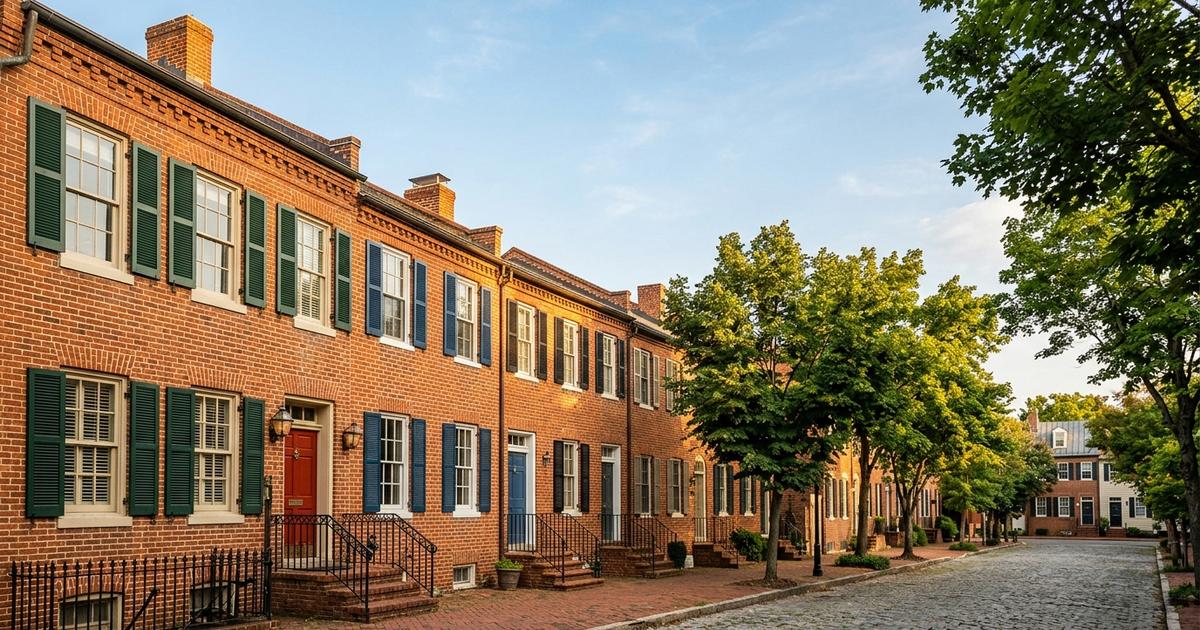
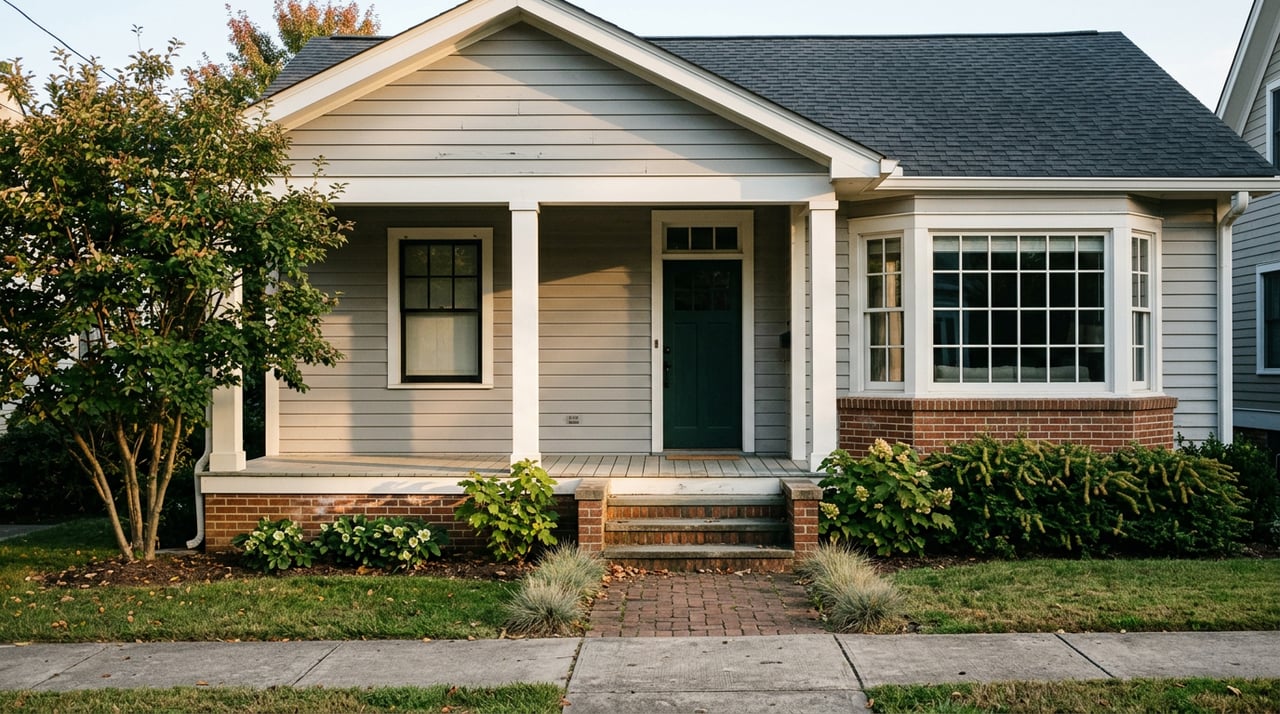
Rosemont's housing stock is part of why this particular change matters more than it would in a newer subdivision. The Rosemont Historic District, added to the National Register of Historic Places in 1992, counts 456 contributing buildings across its 84 acres: 336 houses and apartment buildings, one school, one commercial building, and 118 private garages. Even assuming every garage serves a different address, that leaves most of Rosemont's historic homes without one. These are craftsman bungalows and colonial revivals built between 1908 and 1914, on lots platted well before Alexandria's 1951 zoning overhaul introduced the larger minimum lot sizes the city uses today. Narrow lots from that era often left no room for a driveway. For a lot of Rosemont owners, the curb in front of the house is not a backup option. It is the only parking they have.
That is the mechanism behind Giddins' line at the council hearing. In a newer neighborhood with two-car garages on every lot, removing street parking is an inconvenience. In a neighborhood where a majority of homes were built before anyone thought to put in a driveway, it changes how a house actually functions day to day, and that is the kind of thing buyers notice when they are standing in front of a listing rather than reading about it online.
What This Means If You're Comparing Homes Right Now
If you are looking at Rosemont alongside Del Ray, Old Town, or Warwick Village, the neighborhood-level numbers will tell you Rosemont is competitive on speed and price. What they will not tell you is whether the specific house you are considering fronts a segment of Braddock Road where parking is scheduled to disappear starting in 2028.
The practical version of this check is simple. Pull up the address and see whether it faces Braddock Road between Mount Vernon Avenue and Russell Road, the stretch RCA opposed on both segments. If it does, ask whether the home has off-street parking of its own, since that is the detail that determines whether the 2028 construction timeline is a footnote or a real factor in how the house lives day to day. If it does not front that stretch, none of this applies, and the neighborhood's broader market strength stands on its own.
Virginia's residential disclosure requirements do not obligate a seller to volunteer information about a pending public infrastructure project, so this is not something you should expect to see spelled out in a seller disclosure form. The city's project page tracks the corridor's current design status, and it is worth checking directly rather than relying on secondhand summaries, since design details can shift between now and the 2028 construction start.
A Few Questions Worth Asking Directly
Does this affect every home in Rosemont? No. It affects properties fronting Braddock Road between Mount Vernon Avenue and Russell Road specifically. Homes on side streets, and homes in the segment nearer the Metro station where RCA took no position, are not part of the parking removal RCA opposed.
When does construction actually start? Design work runs into 2027, with construction expected to begin in 2028. The parking itself remains in place until then.
Is this decision final? The May 16 council vote rejected the appeal and upheld the Traffic and Parking Board's design. Barring a further legal or legislative action, the design that was approved is the one that will be built.
Rosemont's market strength is real, and the five-day median and near-full-asking-price sales from the first half of 2026 are not going away because of one road project. What changes is how carefully a buyer should look at a specific address before treating "Rosemont" as a single, interchangeable answer. The neighborhood's own historic building stock and its own civic association's voting record both point to the same conclusion: the block matters as much as the neighborhood name on the listing.
If you're comparing a specific Rosemont address against what else is available in Del Ray, Old Town, or nearby, that is exactly the kind of block-level read The LizLuke Team does for every client before an offer goes in. Get Your Free Home Valuation and we'll walk through what a given address is actually worth, corridor and all.